

Recovery from mental health challenges requires consistent effort across many dimensions—therapy, medication when appropriate, lifestyle changes, and supportive relationships. Among these strategies, short positive affirmations offer a portable, evidence-based cognitive approach that complements professional treatment. Affirmations are brief, present-tense statements designed to challenge automatic negative thoughts and reinforce healthier beliefs about yourself and your capacity to heal. When practiced regularly, they support the cognitive restructuring work central to therapies like Cognitive Behavioral Therapy and Dialectical Behavior Therapy, helping to rewire neural pathways through neuroplasticity.
This blog provides categorized affirmations tailored to specific mental health conditions—anxiety, depression, and trauma—along with guidance on building a sustainable daily affirmations for mental health practice. While affirmations are powerful tools, they work best as part of comprehensive care that includes professional mental health support. If symptoms interfere with daily functioning, reaching out for clinical assessment is an important step in your recovery journey.
If you or someone you know is in crisis, call or text 988 to reach the Suicide & Crisis Lifeline, available 24/7.
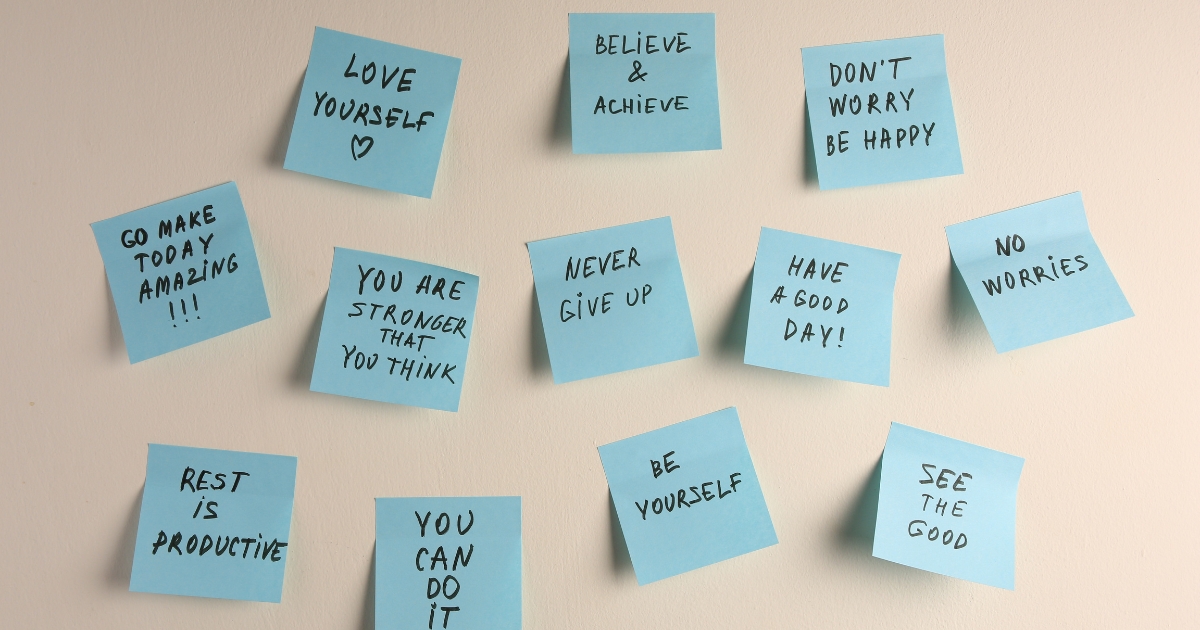
How Affirmations Support Mental Health Treatment and Recovery
The brain’s capacity for neuroplasticity—its ability to form new neural connections—means that repeatedly practicing positive self-talk examples strengthens pathways associated with self-compassion, resilience, and adaptive thinking. Short positive affirmations leverage this capacity by providing consistent, manageable cognitive input that the brain can integrate over time. Over weeks and months, this practice may help reduce the intensity and frequency of distressing thoughts.
Within therapeutic frameworks, affirmations serve as cognitive tools that reinforce skills learned in session. The cognitive reframes learned during therapy become portable through affirmations, available during moments of distress when a therapist is not present. In DBT, affirmations support distress tolerance and emotion regulation by grounding you in the present moment and validating your capacity to manage difficult feelings.
Affirmations for Anxiety, Depression, and Trauma
The short positive affirmations below are organized by condition to help you find phrases that match your current challenges.
Affirmations for Anxiety and Depression
- I am learning to manage my anxiety one breath at a time.
- My feelings are valid, and I have the tools to work through them.
- I am safe in this moment, even when my mind tells me otherwise.
- My worth is not determined by my productivity or mood.
- I trust that this feeling will pass, as it has before.
Affirmations for Healing Trauma
- I survived, and I am here now.
- My body is safe, even when my nervous system feels activated.
- I am not defined by what happened to me.
- I am allowed to set boundaries that protect my peace.
- I am reclaiming my sense of safety one day at a time.
Pair affirmations with grounding techniques: deep breathing, sensory awareness (name five things you see, four you hear), or progressive muscle relaxation.
- Keep a list of 3 to 5 crisis affirmations in your phone’s notes app for immediate access during panic attacks.
- Repeat the affirmation aloud or in your mind while focusing on slow, deep breaths—inhale for four counts, hold for four, exhale for six.
- Pair affirmations with a physical anchor, such as pressing your feet into the floor or holding an ice cube, to engage your senses and interrupt the distress cycle.
- Use affirmations as a bridge to reach out for support—after repeating a grounding phrase, call a sponsor, therapist, or trusted friend.
| Condition | Best Time to Use | Example Affirmation |
|---|---|---|
| Anxiety | Morning routine, before stressful events | I am capable of handling what today brings. |
| Depression | Upon waking, during low-energy periods | I am worthy of care, even on hard days. |
| Trauma | During flashbacks, after triggering events | I am safe now, and I am not alone. |
Building a Sustainable Daily Affirmation Practice
Consistency transforms affirmations from occasional exercises into lasting cognitive shifts. A morning routine with affirmations anchors your day in intention and self-compassion, setting a tone that carries through challenges. Start by selecting 3 to 5 short positive affirmations that resonate with your current recovery goals.
Set aside 3 to 5 minutes each morning, ideally after waking or during a calm moment with coffee or tea. Read each affirmation slowly, either aloud or silently, and pause to notice how it feels in your body. Pair this morning routine with deep breathing or a brief meditation to deepen the impact.
Track your progress by journaling briefly after your affirmation practice.
Learning how to use affirmations effectively means recognizing when they support your recovery and when additional clinical intervention is necessary. If you find yourself repeating affirmations compulsively to suppress distressing thoughts, or if symptoms worsen despite consistent practice, it’s time to seek professional support. Affirmations work best alongside therapy, medication when indicated, and other evidence-based interventions.
| Practice Element | Frequency | Purpose |
|---|---|---|
| Morning affirmation practice | Daily, 3 to 5 minutes | Establish positive cognitive tone for the day |
| Crisis affirmations | As needed during acute distress | Interrupt panic, ground in present moment |
| Evening reflection | 3 to 4 times per week | Reinforce progress, identify helpful phrases |
| Affirmation review and adjustment | Every 2 to 3 weeks | Align practice with evolving recovery goals |
What Are Positive Affirmations and When Do They Work Best?
At their core, short positive affirmations are intentional statements that challenge automatic negative thoughts and reinforce adaptive beliefs. They are not about denying reality or forcing false optimism—effective affirmations acknowledge difficulty while affirming your capacity to cope. The phrase “I am learning to manage my anxiety” is more believable and sustainable than “I never feel anxious,” and believability is what makes an affirmation work.
Affirmations work best when integrated into a broader mental health strategy. They complement therapy by reinforcing skills practiced in session, support medication adherence by fostering hope and self-efficacy, and enhance lifestyle interventions like exercise and sleep hygiene by maintaining motivation. When distress becomes overwhelming or daily functioning suffers, professional support is essential.

Affirm Your Path Forward With Professional Support at Treat Mental Health California
Short positive affirmations are valuable cognitive tools that support mental health recovery, but they reach their full potential when embedded in evidence-based treatment. At Treat Mental Health California, we integrate therapeutic modalities like CBT and DBT with holistic support that addresses the full spectrum of your well-being. Our clinical team helps clients develop personalized affirmation practices alongside individual therapy, group support, medication management when appropriate, and skill-building workshops. Whether you are navigating anxiety, depression, or trauma, we provide the structure and expertise to help you build lasting wellness. Reach out today for a confidential assessment and take the next step in your recovery journey. Your path forward begins with the decision to seek support—and our team is here to support you every step of the way.
FAQs
Below are answers to common questions about using affirmations in mental health recovery.
1. What are positive affirmations and how do they support mental health recovery?
Short positive affirmations are brief, present-tense statements that challenge negative thought patterns and reinforce healthier beliefs about yourself and your capacity to heal. When practiced consistently, they support neuroplasticity—the brain’s ability to form new neural connections—helping to rewire cognitive pathways that fuel anxiety, depression, or trauma responses. Affirmations work best as part of comprehensive treatment that includes therapy and, when indicated, medication.
2. How often should I practice daily affirmations for mental health benefits?
Most mental health professionals recommend a morning affirmation practice lasting 3 to 5 minutes, ideally paired with deep breathing or meditation. Consistency matters more than duration—daily practice over weeks and months yields the most significant cognitive shifts. You can also use crisis affirmations during acute distress, such as panic attacks, to interrupt the distress cycle and ground yourself in the present moment.
3. Can affirmations replace therapy or medication for anxiety and depression?
No, affirmations are complementary tools that enhance professional treatment but cannot replace evidence-based therapy or prescribed medications. They work best as part of a comprehensive care plan that includes clinical assessment, therapeutic modalities like CBT or DBT, and medication management when appropriate. If symptoms interfere with daily functioning, reaching out for professional support is essential.
4. What makes an affirmation effective for mental health recovery?
Effective affirmations are present-tense, personally meaningful, specific to your recovery goals, and believable enough to accept. Phrases like “I am learning to manage my depression” often resonate more than absolute statements like “I am never sad.” Affirmations should align with your core values and acknowledge difficulty while reinforcing your capacity to cope, making them both realistic and empowering.
5. When should I use crisis affirmations versus daily maintenance affirmations?
Daily maintenance affirmations support ongoing wellness during calm moments—morning routines, commutes, or bedtime—and build a foundation of self-worth and resilience over time. Crisis affirmations are shorter, more immediate phrases used during acute distress like panic attacks or trauma triggers. Crisis affirmations focus on safety and grounding, such as “I am safe right now” or “This feeling will pass,” and are most effective when paired with deep breathing or sensory grounding techniques.