Have you ever been certain that the Monopoly Man wears a monocle, only to discover he never has? Or swore that Darth Vader said “Luke, I am your father” in Star Wars, when the actual line is “No, I am your father”? These are classic examples of the Mandela Effect, a fascinating psychological phenomenon where large groups of people share identical false memories of events, facts, or details that never actually occurred. What makes these shared memory distortions so unsettling is their specificity—millions of people remember the same incorrect version with complete confidence. The term itself comes from Nelson Mandela, as countless people vividly remembered him dying in prison during the 1980s when he actually lived until 2013.
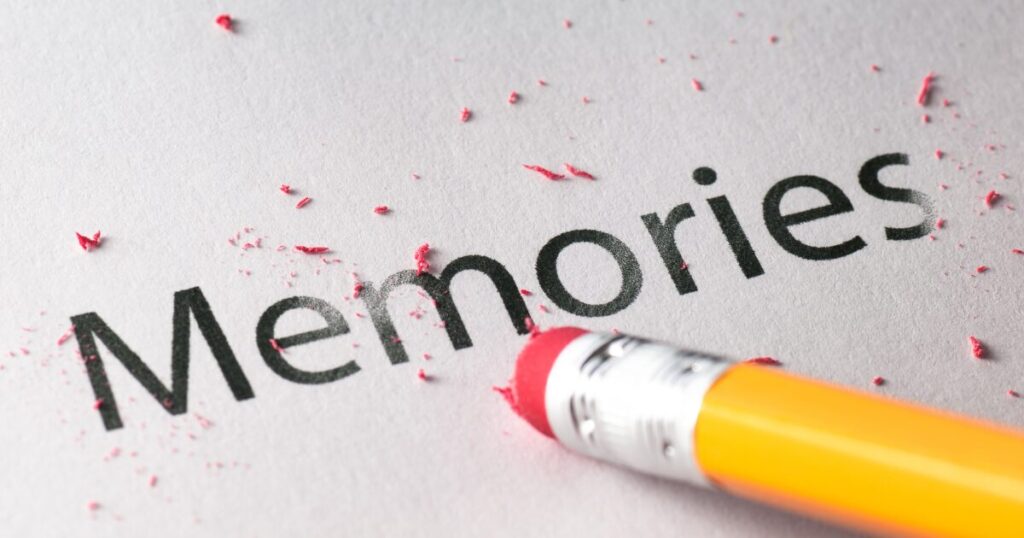
Understanding the Mandela Effect isn’t just entertaining trivia—it reveals fundamental truths about how our brains construct, store, and retrieve memories. Unlike a video camera that records events exactly as they happen, our memory systems are reconstructive. They piece together fragments of experience, expectation, and social influence every time we recall something. The false memory phenomenon explained through neuroscience shows that our brains prioritize efficiency and pattern recognition over perfect accuracy, often filling in gaps with what “should” be there rather than what actually is. For most people, collective false memories are harmless quirks that spark fascinating conversations, but they also illuminate why memory distortions occur in mental health conditions like anxiety, depression, OCD, and trauma-related disorders.
Examples of Mandela Effect in Pop Culture and Movie Quotes
Some of the most shocking famous Mandela Effect instances come from movies and television shows we’ve watched dozens of times. The Star Wars misquote stands as perhaps the most famous: nearly everyone remembers Darth Vader dramatically revealing “Luke, I am your father,” but the actual line is simply “No, I am your father.” Similarly, millions of people confidently recall Forrest Gump saying, “Life is like a box of chocolates,” when Tom Hanks actually says, “Life was like a box of chocolates.” The Snow White villain never said “Mirror, mirror on the wall,” despite this being one of the most quoted Disney lines; the actual phrase is “Magic mirror on the wall.” These examples of Mandela Effect demonstrate how our brains prioritize narrative coherence and dramatic impact over precise accuracy when encoding memories.
Television and cartoon characters provide equally compelling Mandela Effect examples that challenge our confidence in childhood memories. Countless adults remember Curious George having a tail, visualizing him swinging from trees using it, yet the beloved monkey character has never had a tail in any book or episode. The Looney Tunes logo sparks fierce debates because many people insist they grew up watching “Looney Toons” (spelled like cartoons), creating the Mandela Effect around this beloved brand when it has always been “Looney Tunes” (spelled like musical tunes). Even Hannibal Lecter’s chilling introduction in The Silence of the Lambs is misremembered; people quote “Hello, Clarice” as his first words to her, but he actually says “Good morning” before later using her name. These shared memory distortions reveal how our brains reconstruct scenes based on emotional impact and narrative expectations rather than preserving exact details. The false memories feel authentic because our minds fill in what seems most logical or dramatic.
Brand Name Examples of Mandela Effect You’ve Definitely Encountered
Corporate branding provides some of the most widespread examples of Mandela Effect because we encounter these logos and names thousands of times throughout our lives, yet still remember them incorrectly. The Berenstain Bears vs. Berenstein Bears debate is legendary—an overwhelming number of people remember the beloved children’s book series as “Berenstein” (with an “e”), many even recalling how they pronounced it as “steen” or “stine” as children. In reality, it has always been spelled “Berenstain” (with an “a”) after creators Stan and Jan Berenstain. The Fruit of the Loom logo generates equally strong false memories, with countless people vividly recalling a cornucopia behind the fruit in the logo. No version of the Fruit of the Loom logo has ever included a cornucopia, yet this collective false memory is so detailed and widespread that it has become one of the most studied common misremembered facts in psychology research. The Monopoly Man is another classic—most people picture him with a monocle, perhaps confusing him with Mr. Peanut, who does wear one, but the Monopoly mascot has never had a monocle in any version of the game.
Product names and spellings trigger the Mandela Effect because our brains often store phonetic impressions rather than exact spellings, leading to systematic errors across entire populations. The Febreze air freshener brand confuses because many people remember it as “Febreeze” with a double “e,” which seems more logical given that “breeze” is a common word. The Flintstones cartoon family name is another source of false memories—many people remember “Flinstones” (one “t”), but it has always been “Flintstones” with two t’s. These examples of Mandela Effect related to brands demonstrate how our memory systems prioritize phonetic logic and familiar spelling patterns over precise visual details. Even for products we’ve purchased and used for years, our brains reconstruct brand names based on what seems most natural rather than what we actually saw.
Here are additional brand-name examples of this phenomenon:
- Oscar Mayer vs. Oscar Meyer: The beloved hot dog and lunch meat brand is spelled “Mayer” with an “a,” though many people remember “Meyer” with an “e” because that’s a more common spelling of the surname.
- Jif vs. Jiffy Peanut Butter: The peanut butter brand has always been simply “Jif,” never “Jiffy,” yet countless people have vivid memories of “Jiffy” peanut butter from their childhood kitchens.
- Chick-fil-A spelling: Many people remember the restaurant chain as “Chic-fil-A” or “Chik-fil-A,” but it has always been “Chick-fil-A” with the full word “Chick” representing chicken.
- KitKat hyphen debate: The candy bar brand sparks debates because numerous people recall a hyphen between “Kit” and “Kat,” insisting they remember “Kit-Kat” on the wrapper, yet the brand has never used a hyphen.
The Psychology Behind Why We All Remember Things Wrong
Understanding why the Mandela Effect occurs requires examining how memory actually works at the neurological level. Our brains don’t record experiences like a video camera creating perfect replicas we can replay; instead, memory is a reconstructive process where the brain encodes fragments of sensory information, emotional context, and conceptual meaning, then rebuilds these fragments into a coherent narrative each time we recall something. This Mandela Effect psychology reveals that memory errors aren’t failures of attention or intelligence—they’re inherent features of how our brains prioritize efficient pattern recognition and meaning-making over perfect accuracy. The reconstruction process is vulnerable to numerous errors, including confabulation, source monitoring errors, and schema-driven distortions that create the Mandela Effect. When you try to remember the Monopoly Man, your brain might access your schema for “wealthy gentleman from the early 1900s,” which includes monocles, leading you to confidently “remember” a monocle that was never there.
The social dimension of memory adds another layer to the question: why do people remember things wrong? These patterns spread so consistently across populations because memory conformity and social contagion occur when people discuss shared experiences, and the most confident or frequently repeated version becomes adopted by the group, even by those who initially remembered differently. For most people, experiencing common examples of Mandela Effect is harmless and even entertaining, but understanding how false memories form becomes clinically important when these processes contribute to mental health symptoms. In conditions like Obsessive-Compulsive Disorder, individuals may struggle with false memory OCD, where they cannot distinguish between actual memories and intrusive thoughts. Recognizing that all human memory is fallible and reconstructive—not just in quirky pop culture examples but in our personal histories—is an important step in addressing cognitive distortions in therapy.
| Memory Error Type | Definition | Mandela Effect Example |
|---|---|---|
| Confabulation | Unconsciously filling memory gaps with plausible but false information | Adding “Luke” to Darth Vader’s quote for narrative completeness |
| Source Monitoring Error | Remembering information correctly but misattributing its source | Remembering the monocle from Mr. Peanut but attributing it to Monopoly Man |
| Schema-Driven Distortion | Remembering what typically occurs rather than what actually happened | Remembering Curious George with a tail because monkeys “should” have tails |
| Social Memory Conformity | Adopting others’ memory versions through social influence | Accepting the “Berenstein” spelling after hearing others confidently state it |
| Phonetic Encoding Error | Storing sound rather than visual spelling, leading to logical but incorrect versions | Remembering “Febreeze” because “breeze” is a familiar word |
How Recognizing False Memories Can Improve Your Mental Health at Treat Mental Health California
Recognizing that memory is inherently reconstructive and fallible—as demonstrated by the Mandela Effect—can be therapeutically valuable for people struggling with anxiety, rumination, intrusive thoughts, and cognitive distortions. Many anxiety disorders involve catastrophic interpretations of past events where individuals remember social interactions, conversations, or situations in distorted ways that reinforce their fears and negative self-perceptions. Understanding that even confident, detailed memories can be inaccurate helps create psychological distance from rumination and allows individuals to question whether their anxious recollections represent the objective truth or reconstructed narratives influenced by their current emotional state. In Cognitive Behavioral Therapy, therapists help clients identify cognitive distortions, and many of these distortions involve memory processes similar to those creating the Mandela Effect. Learning to recognize memory’s fallibility reduces the authority these distorted recollections hold over emotional well-being and behavior.

At Treat Mental Health California, evidence-based treatment approaches address the intersection of memory, cognition, and mental health through comprehensive assessment and individualized therapy. For individuals experiencing false memory OCD—where intrusive thoughts become confused with actual memories, causing severe distress and compulsive behaviors—specialized Exposure and Response Prevention therapy helps clients build tolerance for uncertainty and resist compulsions to check or seek reassurance about whether something really happened. Whether you’re experiencing intrusive thoughts you can’t distinguish from reality, rumination that replays distorted versions of past events, or cognitive patterns that selectively remember information in ways that maintain depression or anxiety, professional support can help you develop a healthier relationship with your own mental processes. If memory distortions, intrusive thoughts, or cognitive patterns are causing significant distress or interfering with your daily functioning, reaching out to Treat Mental Health California for a confidential assessment is an important step toward accessing effective treatment tailored to your specific needs.
| Condition | Memory-Related Symptoms | Treatment Approach |
|---|---|---|
| False Memory OCD | Intrusive thoughts confused with actual memories, compulsive checking, and inability to trust one’s own recollection | ERP therapy, tolerance for uncertainty, response prevention |
| Generalized Anxiety Disorder | Catastrophic misremembering of events, rumination on distorted past interactions | CBT for cognitive distortions, memory reframing techniques |
| Depression | Selective recall of negative events, difficulty remembering positive experiences | Behavioral activation, cognitive restructuring, and memory bias correction |
| PTSD | Intrusive traumatic memories, fragmented recollections, emotional flooding | Trauma-focused CBT, memory reprocessing |
| Social Anxiety | Distorted recall of social interactions as more negative than they were | Exposure therapy, video feedback, cognitive restructuring |
FAQs About the Mandela Effect
What is the Mandela Effect and where did it get its name?
The Mandela Effect refers to a phenomenon where large groups of people share identical false memories of events, facts, or details that never actually occurred. It’s named after Nelson Mandela because many people falsely remembered him dying in prison in the 1980s, when he actually lived until 2013.
What causes the Mandela Effect and false memories?
The Mandela Effect occurs due to how our brains reconstruct memories rather than recording them like video footage. Contributing factors include confabulation, source confusion, schema-driven errors, and social reinforcement of shared false memories.
Are examples of the Mandela Effect proof of parallel universes or alternate realities?
No, there is no scientific evidence supporting the parallel universe theory as an example of the Mandela Effect. The phenomenon is fully explained by well-documented psychological and neurological processes related to memory formation, retrieval, and social influence.
Can the Mandela Effect indicate a serious memory problem?
Experiencing common examples of Mandela Effect is normal and doesn’t indicate memory problems. However, if you’re experiencing frequent personal false memories, intrusive thoughts you can’t distinguish from reality, or memory distortions causing distress, these could be symptoms of anxiety disorders, OCD, depression, or trauma-related conditions worth discussing with a mental health professional.
What are the most famous examples of the Mandela Effect?
The most widely recognized examples of Mandela Effect include the Berenstain Bears spelling debate, Darth Vader’s actual quote being “No, I am your father” rather than “Luke, I am your father,” the Monopoly Man never having a monocle, Curious George never having a tail, and Looney Tunes being spelled with “tunes” not “toons.” These famous Mandela Effect instances demonstrate how confidently large groups can remember identical details that never actually existed.