Skip to content

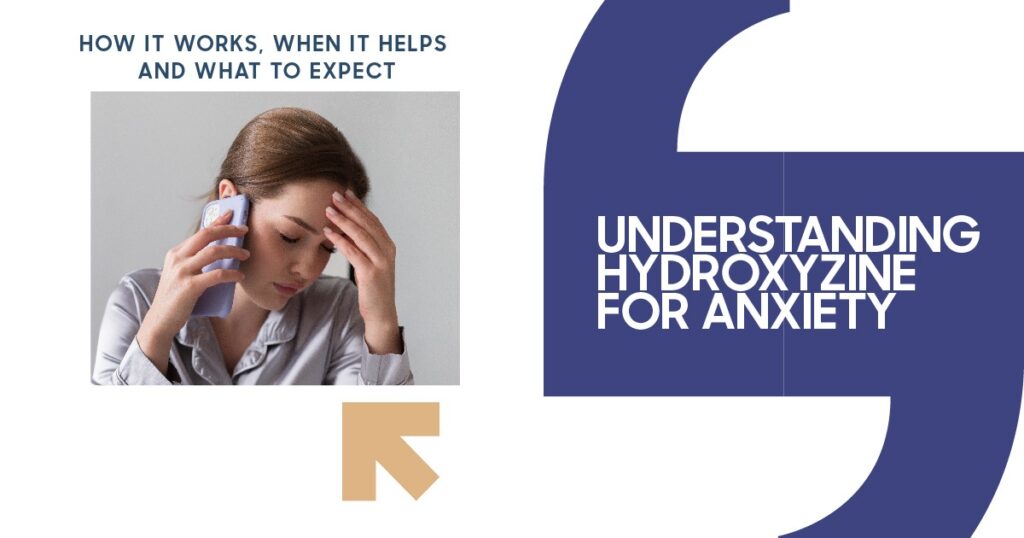
Many people exploring anxiety treatment want options that work quickly, are nonaddictive, and can help with both physical and emotional symptoms. This is why one of the most common questions asked is: Does hydroxyzine help with anxiety? Hydroxyzine is an antihistamine that also has sedative and calming properties, making it a frequently prescribed medication for short-term anxiety relief. Unlike benzodiazepines, it is not habit-forming, which makes it an appealing option for individuals seeking anxiety support without the risk of dependency.
Hydroxyzine can be used during the day for general anxiety, at night for sleep-related anxiety, and during acute episodes such as anxiety attacks or panic symptoms. However, its effectiveness varies depending on a person’s specific needs, medical history, and the type of anxiety they are experiencing. This guide offers a comprehensive breakdown of how hydroxyzine works, who benefits most, how quickly it helps, and how it compares to other options like Benadryl.
What Hydroxyzine Is and How It Helps With Anxiety
Hydroxyzine is an antihistamine, originally used to treat allergies, itching, and motion sickness. Over time, clinicians recognized its calming, sedative, and anti-anxiety effects, leading to its use as an off-label or FDA-approved treatment for anxiety disorders.
Hydroxyzine helps with anxiety by:
- Calming activity in the central nervous system
- Reducing physical symptoms such as restlessness or tension
- Helping regulate overactive stress responses
- Supporting sleep during episodes of nighttime anxiety
- Providing quick, non-addictive relief during panic episodes
Its calming effects are not due to antidepressant or antipsychotic mechanisms – hydroxyzine acts directly on histamine and serotonin receptors, which can reduce both physical agitation and mental overwhelm.
Does Hydroxyzine Help With Anxiety at Night and Improve Sleep?
Many people experience heightened anxiety at night, especially when trying to fall asleep. Rumination, restlessness, and stress often flare up when the mind becomes still. Hydroxyzine’s sedative effects make it useful for nighttime anxiety.
Hydroxyzine may help with anxiety at night by:
- Slowing mental activity
- Easing physical tension
- Reducing nighttime stress cycles
- Supporting sleep onset
- Minimizing nighttime panic symptoms
It is commonly prescribed as an as-needed medication to help break the cycle of anxiety → insomnia → increased anxiety, particularly for individuals who need short-term relief without controlled substances.

Does Hydroxyzine Help With Anxiety Attacks and Panic Disorder?
Hydroxyzine can help during anxiety attacks or panic disorder episodes because it works quickly and reduces physical symptoms of panic. It’s not typically used as a long-term, daily medication for panic disorder, but many clinicians prescribe it as an “as-needed” option.
During anxiety attacks, hydroxyzine may help:
- Slow racing thoughts
- Reduce heart-pounding sensations
- Calm muscle tension or restlessness
- Relieve the sensation of panic or overwhelm
- Improve grounding and physical regulation
Because panic symptoms escalate quickly, having a medication that acts within 15 to 60 minutes can be helpful.
How Fast Does Hydroxyzine Help With Anxiety?
The onset of hydroxyzine varies by individual, dosage, and whether it’s taken on a full or empty stomach.
Typical onset timeline:
- Initial calming effects: 15–30 minutes
- Peak effect: 1–2 hours
- Duration: 4–6 hours
Below is a table outlining onset speed and effects based on common usage scenarios.
Hydroxyzine Onset and Relief Timeline
| Situation | Onset Time | What to Expect |
| General daytime anxiety | 20–45 minutes | Mild calming, reduced physical tension |
| Nighttime anxiety | 20–40 minutes | Sleepiness, easier relaxation |
| Anxiety attacks | 15–30 minutes | Slowing of panic symptoms |
| Panic disorder flare-ups | 20–60 minutes | Reduced anxiety waves, better grounding |
Hydroxyzine is not as fast-acting as benzodiazepines, but it is significantly safer and non-addictive.
Does Hydroxyzine Help With Anxiety and Sleep Together?
Hydroxyzine is often used at night because it supports both anxiety reduction and sleep regulation. Many people who struggle with insomnia linked to stress or anxiety benefit from its sedating properties.
Hydroxyzine supports anxiety-related sleep disturbance by:
- Encouraging faster sleep onset
- Reducing nighttime awakenings
- Lowering cognitive overstimulation
- Relaxing the nervous system
- Breaking the cycle of anticipatory anxiety before bedtime
It is not a long-term insomnia medication, but can be helpful during periods of heightened stress, grief, life transitions, or acute anxiety periods.
Hydroxyzine for Anxiety in Adults: Who Benefits Most?
Hydroxyzine can be a suitable option for adults seeking anxiety relief without the risks associated with sedatives or benzodiazepines.
Hydroxyzine may benefit adults who:
- Experience short-term stress or situational anxiety
- Prefer non-habit-forming medication
- Struggle with anxiety-related insomnia
- Need as-needed support for panic symptoms
- Have medical conditions that prevent the use of stronger sedatives
- Are you managing grief, trauma, or holiday-related stress
- Cannot use controlled substances due to work or recovery needs
Its flexibility and safety make it a common first-line option.
Hydroxyzine vs. Benadryl for Anxiety: How Do They Compare?
Some people wonder whether Benadryl, an antihistamine similar to hydroxyzine, can offer the same anxiety relief. While both medications cause sedation, they differ significantly in effectiveness and intended use. Key differences:
- Hydroxyzine is FDA-approved for anxiety; Benadryl is not.
- Hydroxyzine affects serotonin receptors; Benadryl does not.
- Benadryl’s sedative effect fades with long-term use due to tolerance.
- Hydroxyzine provides stronger anxiety relief than Benadryl.
Below is a table highlighting major differences.
Hydroxyzine vs. Benadryl for Anxiety Relief
| Feature | Hydroxyzine | Benadryl |
| FDA approval for anxiety | Yes | No |
| Sedative effects | Moderate–strong | Mild–moderate |
| Tolerance development | Low risk | High risk |
| Best use case | Anxiety, insomnia, tension | Allergies, mild sleep aid |
| Acting mechanism | Histamine + serotonin | Histamine only |
| Anxiety relief strength | High | Low |
While Benadryl may increase drowsiness, it is not considered an effective or reliable anxiety medication.
Possible Side Effects and What to Expect
Hydroxyzine is generally well-tolerated, but some individuals may experience side effects.
Potential side effects include:
- Drowsiness or sedation
- Dry mouth
- Dizziness
- Blurred vision
- Headache
- Mild gastrointestinal discomfort
Because it can cause sedation, driving or using heavy machinery should be avoided until you know how the medication affects you.
Using Hydroxyzine Safely and Effectively
To get the best results, hydroxyzine should be taken as prescribed by a licensed clinician. It can be used as needed or daily, depending on treatment recommendations.
Helpful usage tips:
- Take it at night if drowsiness is a concern.
- Avoid alcohol, which increases sedation.
- Speak with a clinician if you take other medications that cause drowsiness.
- Use caution if you have kidney or liver conditions.
- Monitor how quickly it works for you to plan usage effectively.
Hydroxyzine works best as part of a broader mental health plan that may include therapy, lifestyle changes, or long-term medication when needed.
A Calmer Path Forward: Connect With Treat Mental Health California
If you’ve been wondering does hydroxyzine helps with anxiety, or you’re exploring personalized treatment options, compassionate support is available. Hydroxyzine may be one option among many, and the best treatment plan depends on your unique symptoms, lifestyle, and overall mental health needs.
Reach out to Treat Mental Health California to learn more about anxiety treatment, medication guidance, therapy services, and tailored support designed to help you feel more grounded and in control.

FAQs
1. How effective is hydroxyzine for managing anxiety at night and improving sleep quality?
Hydroxyzine is often effective at reducing nighttime anxiety because of its calming, sedative properties. It slows the nervous system and helps quiet racing thoughts, which makes falling asleep easier. Many people use it as needed during periods of increased stress or insomnia.
2. Can hydroxyzine provide quick relief for anxiety attacks and panic disorder symptoms?
Yes, hydroxyzine can provide relatively quick relief from panic symptoms due to its fast onset and calming effects. It is not addictive, making it safer for frequent use than traditional sedatives. While not typically used as a long-term panic disorder medication, it can help ease acute episodes.
3. How does the onset and duration of hydroxyzine’s effects compare to Benadryl for anxiety relief?
Hydroxyzine typically begins working within 15 to 45 minutes and lasts several hours, offering meaningful anxiety relief. Benadryl, while sedating, is not designed for anxiety and does not offer the same level of calming benefit. Hydroxyzine is more effective and reliable for anxiety than Benadryl.
4. Is hydroxyzine a suitable option for adults dealing with chronic anxiety, and who might benefit most?
Hydroxyzine is suitable for adults who need short-term or as-needed relief without the risks of dependence. It benefits those dealing with situational anxiety, nighttime anxiety, or acute stress. Individuals needing long-term anxiety management may combine it with therapy or another prescribed medication.
5. What are the primary differences between hydroxyzine and Benadryl in terms of effectiveness and side effects for anxiety treatment?
The main differences involve effectiveness and intended use. Hydroxyzine is approved for anxiety, works on serotonin receptors, and provides stronger calming effects. Benadryl is an allergy medication with sedative side effects, and tolerance builds quickly. Hydroxyzine generally has more predictable anxiety relief with fewer long-term concerns.